Court-filing engine
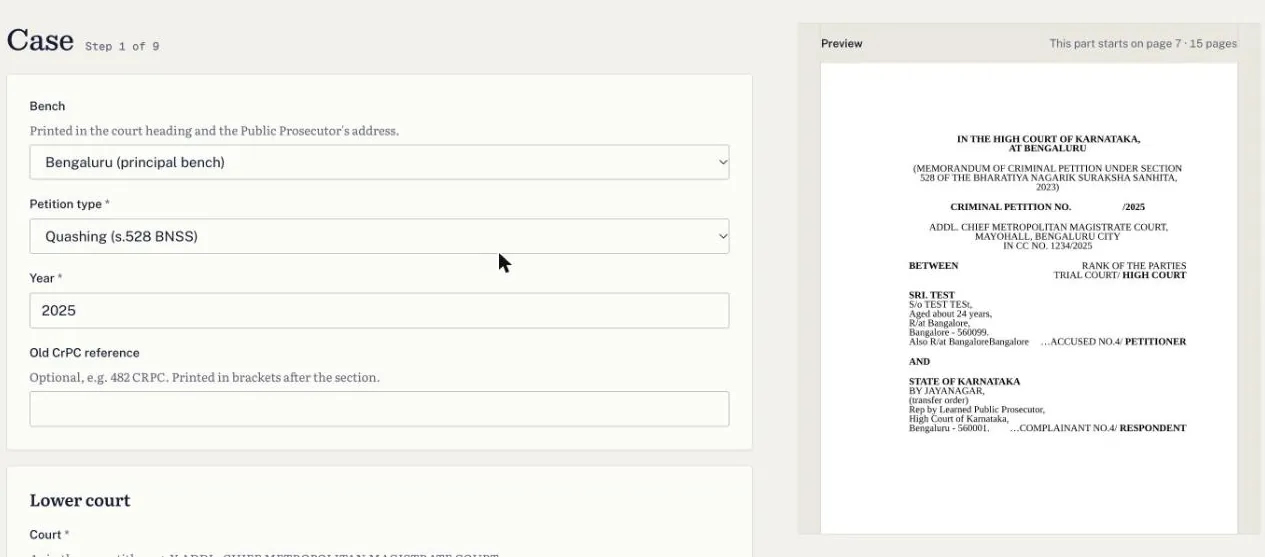
Registry-ready in minutes: a court-filing engine that runs entirely in the browser, with five filing families live in the pilot.

Filings come back for formatting, not argument. We turn registry rules into software, and keep case data on the lawyer's own machine.
Margins, page numbering, index formats and annexure order differ by court and filing type, and are rarely written down in one place.
One late change to a petition shifts every page number in the index, so the bundle gets reassembled close to the deadline.
Clients' facts are sensitive. Every server that stores them is one more thing to secure, explain, and answer for.
An editor that shows the filed pages as you type, so the lawyer sees exactly what the Registry will see.
Hosting that does almost nothing: the server signs people in and holds sessions, never case data.
Case data stays in the browser and in project files the firm keeps. The filing rules live in code, one template per filing type.
Layout is deterministic: the same facts always give the same pages. No language model writes the text that gets filed.
Registry-ready in minutes: a court-filing engine that runs entirely in the browser, with five filing families live in the pilot.
Tell us which one. We'll tell you whether it can become software, and what it would take.
Build with Us →